How Often Should You Really Change Your Oil?
3,000 miles is out of date for most cars — but so is 'whenever the light comes on.' What actually determines your interval.
The old 3,000-mile rule was sound advice for its era. Modern oils and engines have stretched that number considerably, but that doesn't mean oil changes don't matter anymore. It means the right interval depends on how you actually drive, not on a number from 1985.
What Your Manufacturer Says (And Why It Varies)
Most owner's manuals today suggest somewhere between 5,000 and 10,000 miles for normal driving, depending on the engine and the oil the factory specified. Synthetic oils hold up longer than conventional oil, which is a big part of why intervals stretched.
Those numbers assume normal conditions: steady highway speeds, moderate temperatures, and a clean air filter doing its job. Plenty of real driving isn't normal by that definition.
What Counts as 'Severe' Driving
Your manual has a second, shorter interval, often called severe service. More drivers qualify for it than realize. Severe conditions include:
- Lots of short trips where the engine never fully warms up (condensation and fuel dilute the oil).
- Stop-and-go city traffic and long idling.
- Towing, hauling, or regular mountain driving.
- Very hot or very cold ambient temperatures.
- Dusty conditions such as gravel roads or construction areas.
If most of your miles are short trips around Lakewood in winter, you're firmly in severe territory and the shorter interval is the one that protects your engine.
Better Than Any Mileage Number: Looking at the Oil
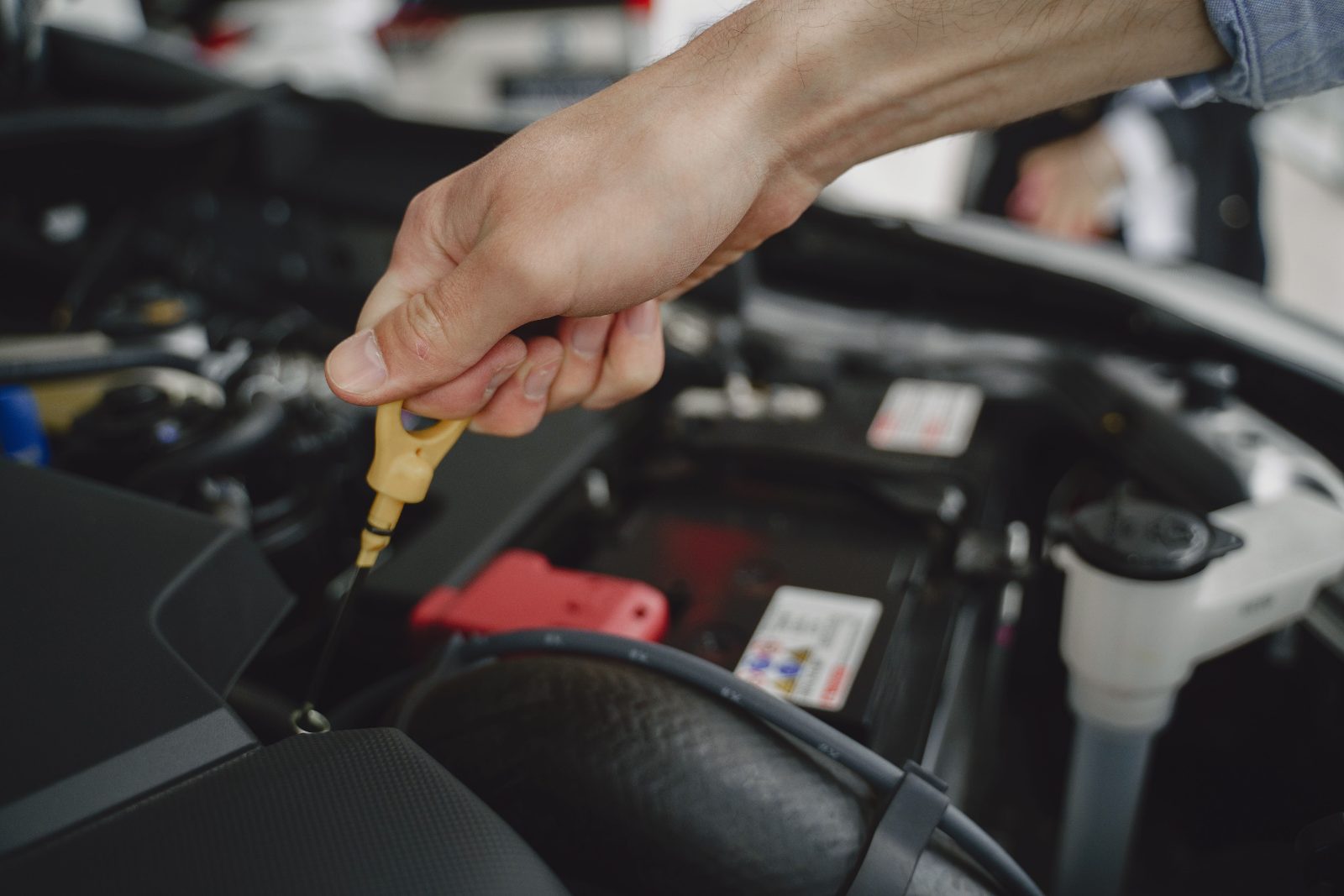
Pull the dipstick now and then. Fresh oil is amber and translucent; oil that's been working turns darker as it holds contaminants in suspension. That darkening alone doesn't mean it's worn out — but oil that's black, gritty, smells like gas, or sits far below the full mark is telling you something.
Modern cars also track oil life electronically based on how the engine is actually used. When that display says it's time, believe it; it's counting the same severe-service factors we just described.
Don't Forget the Filter
An oil change is really an oil-and-filter change. The filter captures the metal shavings and carbon your new oil is about to start lifting off the engine walls. Putting fresh oil through a saturated filter shortens the whole job. Any reputable shop replaces it every time and it's worth confirming that yours does.
