
Mountain Road Trip Checklist: Before You Drive I-70
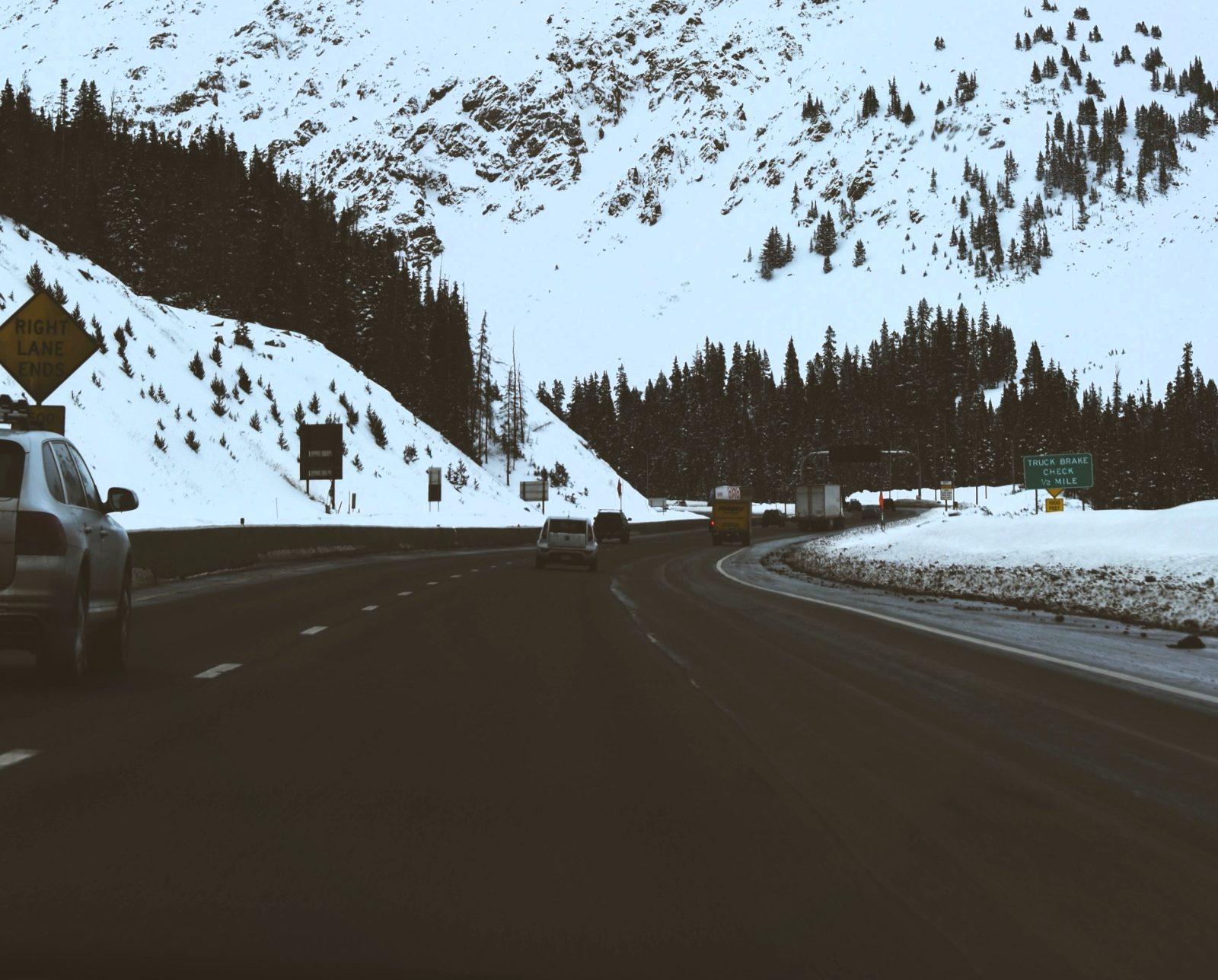
Elevation, grades, weather swings, and long distances between towns. A practical pre-trip check for the mountain corridor.
The drive from Denver to the high country is one of the prettiest commutes in America. It's also one of the more demanding things you can ask of a car. Long grades, rapid weather changes, high altitude, and stretches where the next town is an hour away all argue for twenty minutes of preparation before you go.
The Ten-Minute Under-Hood Check
Everything that keeps the car cool, lubricated, and running deserves a look before a mountain trip:
- Coolant level and condition — the cooling system works hardest on long climbs.
- Oil level — a quart low matters more at altitude and under load.
- Windshield washer fluid — filled with a mix rated for below-freezing temperatures in winter.
- Belts and hoses — look for cracks, fraying, or soft spots.
- Battery terminals — clean and tight.
- Tires: pressure to the door-jamb number, tread depth, and (we cannot stress this enough) don't forget the spare. While you're at it, make sure you have the jack and tire iron in the event you need to use the spare.
Brakes, Because It's All Downhill Coming Back
The return trip is where brakes earn their keep. If you've noticed squealing, pulsation, a soft pedal, or (most importantly) a grinding/crunching sound, get them looked at before the trip rather than after. On the descents themselves, use a lower gear and let the engine hold your speed. Firm, spaced brake applications beat riding the pedal the whole way down.
Give yourself extra following distance in the mountains too. Altitude reduces engine power somewhat, loaded vehicles accelerate more slowly, and interstate traffic at the Eisenhower Tunnel is unforgiving of hesitation.
Weather and Traction Rules
Mountain weather changes faster than valley weather. A sunny drive out can mean snow on the way back. From fall through spring, watch for posted traction requirements on the I-70 mountain corridor: during storms, Colorado can require tires with adequate tread or restrict certain vehicles entirely, and chain restrictions can be announced with little warning.
Carry chains if you're traveling in winter and know how to install them in your driveway — not on the shoulder in a snowstorm. A quick weather and road-condition check before departure takes two minutes on your phone.
The Cabin Kit Nobody Packs Until They Need It
Water and a snack, a blanket, a flashlight with working batteries, a phone charger, an ice scraper, and a small first-aid kit. Add a basic tire gauge and a portable jump starter if you have one. None of it weighs anything and, on a remote stretch of I-70 in January, it's the difference between a delay and a real problem.
